Mastering the Father and Son 3D Tumbler Wrap for Professional Sublimation Workflows
In the competitive landscape of custom merchandise, the difference between a generic product and a bestseller often lies in the quality of the design asset and the efficiency of the production workflow. For creators, small business owners, and hobbyists specializing in personalized gifts, the Father and Son 3D Tumbler Wrap represents more than just a digital file; it is a foundational component of a streamlined sublimation process. Understanding how to integrate this specific asset into your broader creative and manufacturing pipeline can significantly reduce preparation time while enhancing the final aesthetic appeal of your products.
This article explores the practical implementation of the Father and Son 3D Tumbler Wrap within a professional workflow. We will examine pre-production preparation, technical compatibility, execution strategies, and quality control measures to ensure that every 15 oz tumbler you produce meets high standards of consistency and visual impact.
Understanding the Asset in Your Production Pipeline
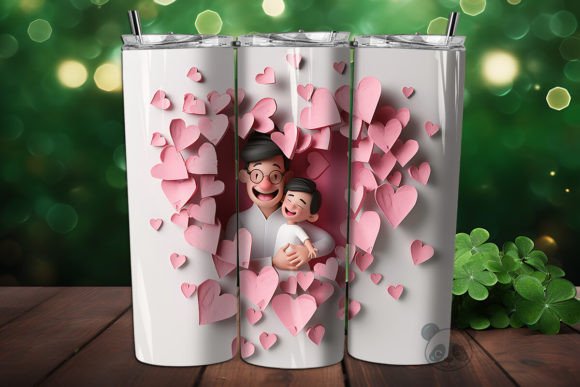
Before initiating any print job, it is crucial to understand the specifications of the digital assets you are working with. The Father and Son 3D Tumbler Wrap is provided as a high-resolution PNG file, measuring 9.3 inches by 8.2 inches at 300 DPI. This resolution is critical for sublimation printing, where pixelation or blurriness can ruin the perceived value of the final product. The "3D" aspect of the design refers to the visual depth and layering inherent in the artwork, which creates a dynamic look on the curved surface of the tumbler.
When incorporating this wrap into your workflow, recognize that it is a digital download, not a physical item. This distinction dictates the initial steps of your process. You must have the necessary hardware and software infrastructure ready before purchase. This includes a sublimation printer, heat press capable of handling tapered cylinders, sublimation paper, and graphic editing software such as Adobe Photoshop, Illustrator, or free alternatives like GIMP or Canva Pro. The instant nature of the download allows for immediate integration into your project queue, eliminating shipping delays and enabling rapid prototyping or last-minute order fulfillment.
Pre-Production: Preparation and Compatibility Checks
Efficiency in sublimation begins long before the heat press is turned on. The first phase of your workflow involves verifying compatibility and preparing your digital workspace. Since the Father and Son 3D Tumbler Wrap is designed specifically for skinny tumblers, typically around 15 ounces, you must ensure your physical blanks match these dimensions. Using a wrap designed for a different diameter will result in misalignment, overlapping seams, or exposed areas.
Key preparation steps include:
- File Organization: Upon downloading the ZIP file, extract the PNG immediately and store it in a dedicated folder for seasonal or thematic designs. Naming conventions matter; consider labeling files with dimensions and theme (e.g., "FathersDay_3D_Wrap_9.3x8.2.png") to streamline retrieval during busy periods.
- Color Profile Verification: Sublimation printers often perform best with specific color profiles, such as sRGB or ICC profiles tailored to your ink and paper combination. Open the PNG in your editing software and verify that the colors appear vibrant and accurate. The watercolor and 3D elements in the Father’s Day design rely on subtle gradients, which can band if the color depth is compromised.
- Template Alignment: Use a 15 oz tumbler template overlay in your design software. Place the Father and Son 3D Tumbler Wrap within this guide to visualize how the seam will align. This step prevents costly mistakes where the main subject (the father and son imagery) is split awkwardly across the seam.
Execution: Integrating the Wrap into the Sublimation Process
Once the digital file is prepared, the workflow moves to physical execution. This stage requires precision in handling materials and managing heat variables. The Father and Son 3D Tumbler Wrap is not just a background; it is the primary visual element. Therefore, its placement on the tumbler must be intentional.
Start by printing the design on high-quality sublimation paper. Ensure your printer settings are optimized for photo-quality output to capture the details of the 3D design and the softness of the watercolor elements. Mirror the image before printing, as this is a standard requirement for sublimation transfer. After printing, allow the ink to dry completely to prevent smudging, which can blur the intricate details of the father and son motif.
Wrapping the tumbler requires care to avoid wrinkles or air bubbles, which can cause white streaks in the final product. Use heat-resistant tape to secure the sublimation paper tightly against the tumbler. For the best results with a 3D Tumbler wrap, ensure the tension is even around the circumference. If the paper is too loose, the image will shift; if it is too tight, it may tear or create uneven pressure points during heating.
Heat pressing parameters vary by equipment, but generally, a temperature of 380°F to 400°F for 180 to 200 seconds is standard for 15 oz tumblers. However, always consult the manufacturer’s guidelines for your specific blanks. The complexity of the Father And Son 3D Tumbler Wrap Background means that consistent heat distribution is vital. Uneven heating can result in patchy color transfer, particularly in the lighter watercolor areas. Using a convection oven or a specialized tumbler press with even heat circulation can mitigate these risks.
Quality Control and Post-Production Assessment
The workflow does not end when the tumbler is removed from the press. Quality control is an essential step that ensures customer satisfaction and reduces returns. Allow the tumbler to cool completely before removing the sublimation paper. Peeling the paper while hot can sometimes affect the finish or cause burns.
Inspect the final product for common issues:
- Seam Alignment: Check if the pattern flows smoothly across the seam. The seamless pattern aspect of the design should make this transition nearly invisible if aligned correctly.
- Color Fidelity: Compare the printed tumbler against your monitor’s preview. Note any significant shifts in hue, particularly in the skin tones of the father and son figures or the vibrancy of the background elements.
- Surface Defects: Look for any white specks or lines, which indicate dust or hair trapped between the paper and the tumbler during pressing. These are often preventable with a clean workspace and lint rollers.
If the output meets your standards, proceed to packaging. If not, analyze the failure point. Was it a printing issue, a wrapping error, or a heat press inconsistency? Documenting these observations helps refine your workflow for future batches.
Strategic Use Cases and Business Integration
Beyond the technical execution, understanding where the Father and Son 3D Tumbler Wrap fits into your business strategy can maximize its value. This asset is particularly effective for seasonal campaigns, such as Father’s Day promotions. Because it is an instant digital download, it allows for agile inventory management. You do not need to pre-print large stocks of wrapped tumblers; instead, you can adopt a print-on-demand model, reducing waste and storage costs.
Furthermore, this design can be part of a broader product line. Consider bundling the tumbler with other Father’s Day items, such as coasters or keychains, using complementary designs from the same collection. The cohesive look enhances the perceived value of the gift set. For marketers and bloggers, this asset provides excellent content opportunities. You can create behind-the-scenes videos showing the sublimation process, highlighting the 3D effects and the emotional appeal of the father-son theme. This type of content builds trust and demonstrates craftsmanship, aligning with E-E-A-T principles by showcasing expertise and authenticity.
For educators and workshop leaders, this wrap serves as a practical teaching tool. It illustrates key concepts in graphic design, such as resolution, color management, and layout for curved surfaces. Students can learn how to adjust existing templates and understand the physical constraints of sublimation printing.
Long-Term Workflow Optimization
To sustain efficiency, treat the Father and Son 3D Tumbler Wrap as part of a reusable library. Save your adjusted templates, including any text overlays or additional graphics you add, as separate files. This allows you to quickly replicate successful designs for future orders or similar themes. Regularly update your software and firmware for printers and heat presses to ensure compatibility with high-resolution PNG files.
Additionally, gather feedback from customers. Did they appreciate the depth of the 3D design? Was the color accuracy satisfactory? Use this data to tweak your printing profiles or select different blank suppliers if necessary. Continuous improvement is key to maintaining a competitive edge in the custom merchandise market.
In conclusion, the Father and Son 3D Tumbler Wrap is a versatile and high-quality asset that, when integrated into a well-structured workflow, can enhance both the aesthetic and operational aspects of your sublimation business. By focusing on preparation, precise execution, and rigorous quality control, you can deliver exceptional products that resonate with customers and streamline your production process.